
Membership isn’t something you just sign up for - it’s a two-way agreement. Whether it’s a gym, a club, an online community, or even a professional association, being a member means you meet certain standards and agree to certain expectations. But who exactly qualifies? That’s the question most people ask before they even start the process. The answer isn’t always obvious, and it’s rarely the same across organizations.
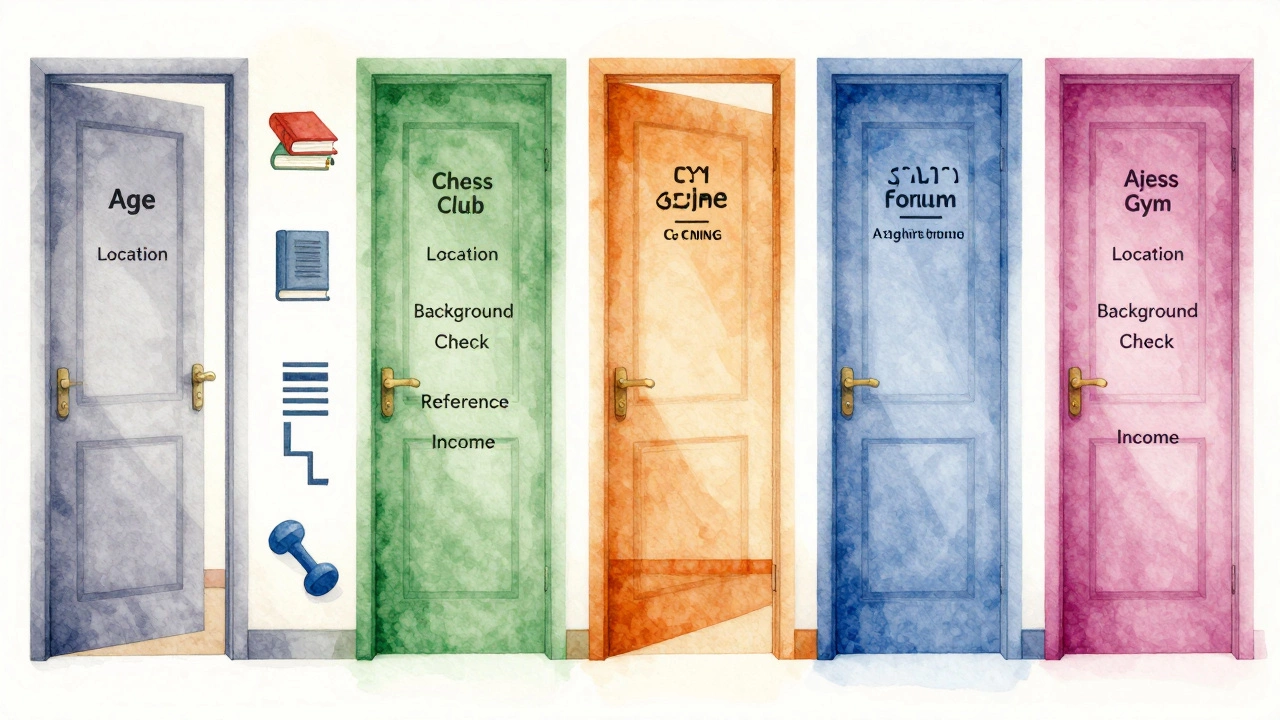
Some groups welcome anyone with a pulse and a credit card. Others have strict criteria - age, location, background checks, proof of income, or even references. If you’re wondering if you’re eligible, you’re not alone. Many people hit roadblocks because they assumed membership was open to all, only to find out later they didn’t meet the hidden requirements. For example, if you’re looking into exclusive social networks or private services, you might come across listings like euro girls escort london - which, while unrelated to typical membership structures, highlights how some services use narrow eligibility to control access.
Membership Isn’t One-Size-Fits-All
There’s no universal rulebook for membership. What works for a nonprofit board won’t work for a private members’ club. Even within the same city, two gyms might have completely different rules. One might require a 12-month contract and a background check. Another might let you walk in with cash and a photo ID. The key is to look at the why behind the rules.
Organizations set membership criteria to protect their culture, ensure safety, manage capacity, or maintain quality. A chess club doesn’t need to screen for criminal history. A private members’ club in London might. A fitness studio in Perth might require proof of vaccination. A dating app might ask for verified photos and a selfie video. Each rule has a reason - even if it’s not stated outright.
Common Eligibility Requirements
Most organizations use a mix of these basic filters to decide who gets in:
- Age - Most require you to be 18 or older. Some, like senior clubs or youth programs, set upper or lower limits.
- Location - Many memberships are regional. You can’t join a local hiking group if you live 300km away. Some online groups restrict access by country due to legal or logistical reasons.
- Identification - Government-issued ID is standard. Some require proof of address, like a utility bill or bank statement.
- Background checks - Common in childcare, elder care, or private security roles. Less common in hobby groups, but still possible.
- Income or payment proof - High-end clubs may ask for bank statements or employment verification to ensure members can afford dues.
- References or sponsorships - Exclusive clubs often require an existing member to vouch for you.
- Behavioral history - Past violations, bans, or complaints can disqualify you, even if they happened years ago.
These aren’t just bureaucratic hurdles. They’re filters that keep the group functioning the way it was designed.
What Happens If You Don’t Qualify?
Getting rejected doesn’t mean you’re unworthy - it just means you don’t fit the current model. That’s not personal. It’s structural. If you’re turned down, ask why. Most organizations will tell you, if you ask politely. Sometimes the issue is fixable: you need to wait until you’re 18, move to the right postcode, or complete a training course.
Other times, the door is closed for good. That’s okay. Not every group is meant for you. And that’s not a failure - it’s clarity. You save time by knowing early. Instead of chasing membership in a place that won’t accept you, focus on finding one that will.

How to Check Your Eligibility
Don’t guess. Don’t assume. Don’t rely on forums or hearsay. Go straight to the source.
- Visit the official website. Look for a “Membership” or “Join Us” page.
- Read the terms carefully. Hidden rules are often buried in small print.
- Call or email the organization. Ask: “What are the exact requirements to become a member?”
- Ask for a checklist. Many groups will send you one if you request it.
- Look for FAQs. If they’ve answered it before, they’ll have it written down.
Pro tip: If the website gives vague answers like “we welcome all qualified applicants,” that’s a red flag. Real organizations list specifics. If they don’t, they might not be organized - or they might not be legitimate.
Red Flags to Watch For
Not every membership offer is trustworthy. Watch out for:
- Requests for payment before any information is given
- No physical address or contact details
- Pressure to join immediately
- Claims like “everyone qualifies” - that’s almost never true
- Unprofessional communication (poor grammar, spammy emails)
If it sounds too easy, it probably is. Legitimate memberships don’t need to convince you. They just need to inform you.
Real Examples from Different Fields
Let’s look at three real-world cases:
1. A Private Members’ Club in London - Requires: 2 existing members to sponsor you, proof of income over £50k/year, no criminal record, and an in-person interview. They don’t advertise this publicly. You have to know someone already.
2. A Local Book Club in Perth - Requires: a valid email, a willingness to read one book a month, and attendance at 75% of meetings. No ID needed. No fee. Just show up.
3. An Online Coding Community - Requires: a GitHub profile with at least 5 public repositories, a 300-word bio explaining why you want to join, and agreement to their code of conduct. No payment. No age limit. Just proof of skill.
Each one is wildly different. None of them would accept the same person. That’s the point.
What If You’re Not Sure You Fit?
Then try anyway. Many organizations have a trial period, a waiting list, or a probationary status. You might not qualify right away, but you might qualify in six months. Take the first step. Fill out the form. Send the email. Ask the question.
Don’t let fear of rejection stop you. Most people don’t get in because they never applied. Not because they were turned down. The biggest barrier isn’t the rules - it’s the doubt in your own mind.
Final Thought: Membership Is About Fit, Not Access
Being a member isn’t about having a badge or a keycard. It’s about belonging. And belonging means you align with the group’s values, rhythm, and purpose. Some groups want discipline. Others want creativity. Some want silence. Others want loud debates.
There’s no universal answer to “who can become a member?” because the question isn’t about you - it’s about them. What do they need? What do they protect? Who do they want around?
Once you stop asking, “Can I join?” and start asking, “Do I belong here?” - you’ll find the right place faster. And if you don’t? That’s not a failure. It’s a match made in the right direction.
And if you’re ever curious about services outside the norm - like euro girl escort london - remember: those are commercial services with their own rules, unrelated to community or organizational membership. They operate in a different space entirely.
But if you’re looking for real connection - real belonging - start with clarity. Know the rules. Ask the questions. Show up. And don’t settle for anything less than a place where you’re truly welcome.
And just to cover all bases - if you’re searching for something like euro escort girls london, understand that these are adult services, not membership-based communities. They don’t follow the same logic. Don’t confuse one with the other.
Arlen Fitzpatrick
My name is Arlen Fitzpatrick, and I am a sports enthusiast with a passion for soccer. I have spent years studying the intricacies of the game, both as a player and a coach. My expertise in sports has allowed me to analyze matches and predict outcomes with great accuracy. As a writer, I enjoy sharing my knowledge and love for soccer with others, providing insights and engaging stories about the beautiful game. My ultimate goal is to inspire and educate soccer fans, helping them to deepen their understanding and appreciation for the sport.
view all postsWrite a comment